How Long Does It Take to Get Implant-Supported Dentures?
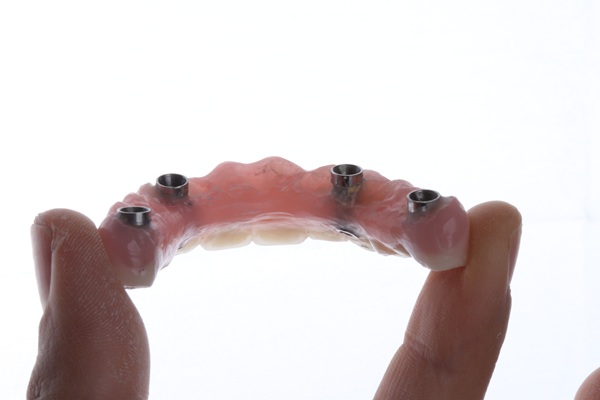
You have probably heard about dental implants and how this tooth-replacement option can restore your smile. Dentures are another treatment that patients with multiple missing teeth can benefit from. Your dentist can also combine the two by providing implant-supported dentures. There are reasons that this method offers advantages over traditional dentures.
Implant-supported dentures vs. regular dentures
Both types of dentures come in partial and full varieties. Both also help restore the person’s smile and allow them to eat and speak normally once again. However, there are key differences between both of these treatments, including the following:
- Traditional dentures rest directly on the person’s gums
- Implant-supported dentures attach to titanium implants
- Patients can remove their own dentures
- Only the dentist should remove implant-supported dentures
Preparing to get implant-supported dentures
Patients who are interested in getting this treatment should first speak to a dentist, who can explain the procedure and the benefits and drawbacks of the process. If necessary, the dentist will remove any teeth that cannot be salvaged due to decay or other damage. The dentist will take X-rays and make impressions of the patient’s mouth and send this information to an off-site dental lab.
Putting in the implants
At the patient's next appointment, they will return to the office for implantation. First, the dentist will numb the patient with a local anesthetic to ensure they remain comfortable during the procedure. Next, an incision is made in the person’s gums, and the dentist will place the screw-like posts into the jaw.
Once the person’s mouth has healed and the jawbone fuses to the posts, the next step will occur. Here, the dentist attaches abutments to the posts. The dentist will then place the person’s dentures onto the abutments and will ensure that there is a comfortable fit.
The healing timeline
One of the possible drawbacks of getting implant-supported dentures is that the treatment process can be lengthy. Each individual appointment will take about an hour. However, the procedure and healing process occur over several months.
The dentist must wait until the patient’s gums and jaw have fully healed from the surgeries before moving on to the next step. The implants will also need to be fused with the patient's jawbone, ensuring a solid foundation for future dental restoration. This process is known as osseointegration. It can take six months or longer before the patient returns to the dentist to have their dentures placed.
Follow-up
Before the patient leaves the office with the dentures, the dentist may have to make adjustments. In the coming weeks and months, the dental staff will follow up with the person to make sure eating and speaking are not difficult. The dentist may also provide insight and education to help the patient take care of the implant-supported dentures. This includes proper brushing and flossing.
Schedule a consultation to say
Before you decide whether to get implant-supported dentures, you should understand how the procedure works. It is also important to realize that the process can be long, depending on your health and recovery from the surgeries. If you are interested in implant-supported dentures, call our Richland office today to schedule an appointment and start your journey toward a healthier and more confident smile.
Request an appointment here: https://www.midtowndentalclinic.com or call Midtown Dental at (509) 946-1678 for an appointment in our Richland office.
Check out what others are saying about our dental services on Yelp: Dentures in Richland, WA.
Related Posts
If you need a tooth replacement solution, you should visit with your dentist as soon as you can. You do not want to live without teeth for long. This presents health challenges and concerns with your smile. Even missing one tooth can be troublesome. But the good news is that there are ways to solve…
If you are struggling with chronic bad breath, also known as halitosis, you are not alone, and your general dentist can help. The first step to fresher breath is understanding the causes of bad breath and how to talk to your dentist. A general dentist can help you determine what is causing your halitosis and…
Regular visits to a general dentist are essential for maintaining good oral and overall health. However, many people skip their routine appointments due to scheduling issues or fear of dentists. While these visits may seem inconvenient or unnecessary, they can prevent serious oral health issues down the road. If you are experiencing the following three…
General dentists are the number one go-to for preventing and eliminating threats to oral health. While the American Dental Association generally recommends that everyone begin attending biannual appointments at 12 months of age, we understand that some can overlook this. This first checkup can be the beginning of regular biannual appointments to help ensure your…